Read online French and Russian in Imperial Russia: Language Use among the Russian Elite (Russian Language and Society) - Derek Offord file in PDF
Related searches:
French and Russian in Imperial Russia: Language Use among the
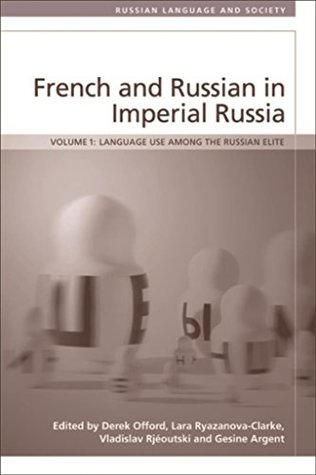
French and Russian in Imperial Russia: Language Use among the Russian Elite (Russian Language and Society)
French and Russian in Imperial Russia, i: Language Use among the
Russia and France – the messy break-up - napoleon.org
The Russian Railways and Imperial Intersections in the
The Great War and the Polish Question in Imperial Russia, 1914–1917
The 10 Most Important Russian Czars and Empresses
The Good, the Great and the Terrible Tsars and Tsaritsas of
Meet the Russian Spies Who Inspired ‘The Americans‘
Russian Federation The Cancer Atlas
Causes of the Russian Revolution
French and Russian in Imperial Russia: Language Attitudes and
French and Russian in Imperial Russia - Wikipedia
French and Russian in Imperial Russia edited by Derek Offord
French and Russian in Imperial Russia, vol. 1, ‘Language use
French and Russian in Imperial Russia PDF - flathenacdocolci5
The French Language in Russia Amsterdam University Press
LINGUIST List 26.4022: Books: French and Russian in Imperial
Two centuries after Napoleon defeat, Russia and France bury their
Postcards commemorating the visit of the Russian imperial family to
Why did the Russian aristocracy speak mainly French in the early
French and Russian in Imperial Russia - Edinburgh Research
Imperial Russia 1894–1917 - Imperial Russia - Government and
Russia and Europe OpenMind
Okhrana: The Paris Operations of the Russian Imperial Police - CIA
Why Did Russia Ally Itself With France and Britain in World
The Women Warriors of the Russian Revolution History
Reform and reaction in Russia - Russian Revolution
Noble Families of the Russian Empire NationStates World
IMPERIAL RIVALRY WITH THE RUSSIAN EMPIRE Professor
Dismissal of Suit Brought Against the Russian Federation by French
The 1717 Convention of Amsterdam, a treaty marking the alliance
Political Ideas And Institutions In Imperial Russia - 1st Edition - Ma
Changes in Educational Ideology and Format: 18th to 20th Century
Russia and Europe (1547–1917) — EGO
French and Russian in Imperial Russia. Volume 2:: Language
The French Language in Russia: A Social, Political, Cultural
Russia - The Russian Empire Britannica
Rare Catalog Chronicles Russia’s Regalia and Crown Jewels
Class divisions in Russia - Imperial Russia - Government and
All You Need to Know about the Russian Empire Superprof
The Imperial Russian army of 1914 World History
How did Catherine the Great’s reign shape Imperial Russian
The First 7 Romanov Tsars of Imperial Russia In Order
Imperial Russia Article about Imperial Russia by The Free
the cambridge history of RUSSIA
The Russian Empire (1721-1917) - VoegelinView
The Lost Generation: The End of the Russian Aristocracy
Russian colonization of the Americas - Wikipedia
The Fall of the Russian Empire: The End of the Monarchy
Russian may be all that and more but it’s certainly not the only language spoken in russia. But you don’t need to know all of them – russian is official throughout the nation, although there are various co-official languages in different regions.
Following the french revolution, bonaparte took a divided and weakened france and turned it into the most powerful nation in europe. Russia and its allies were defeated at austerlitz in 1805; the russians and french fought again in 1806 and 1807. There were five years of peace, followed by napoleon's catastrophic invasion of russia in 1812.
In the late 1800s, russia was the largest country in the world. Compared to western europe, the russian empire was politically, economically and socially.
Although russian is the only federally official language of russia, there are several other officially recognized languages within russia's various constituencies – article 68 of the constitution of russia only allows the various republics of russia to establish official (state) languages other than russian.
Imagine that instead of being born in either the late 20th or early 21st century, you were born in imperial russia, a time period that spanned from the 18th century until 1917.
Russia and its allies were defeated at austerlitz in 1805; the russians and french fought again in 1806 and 1807. There were five years of peace, followed by napoleon's catastrophic invasion of russia in 1812. Russian armies fought the french for two more years and were greatly responsible for napoleon's final defeat and expulsion from europe.
France between 1880 and 1917, french citizens bought a total of 30 million rubles in russian bonds and their owners today believe that by now they would be worth around 30 billion euros.
Set against the background of the rapid transformation of russia into a major european power, the two volumes of french and russian in imperial russia consider the functions of miltilingualism and the use of french as a prestige language among the elite, as well as the benefits of franco-russian bilingualism and the anxieties to which it gave rise.
French and russian in imperial russia: language use among the russian elite (russian language and society) [ryazanova-clarke, lara, argent, gesine, rjeoutski, vladislav, offord, derek] on amazon.
Ilanguage attitudes and identity/i by derek offord and gesine argent publisher: 'edinburgh university press'.
Book description: examines the functions of french in various spheres, domains and genres. This is the first of two companion volumes which examine language use and language attitudes in eighteenth- and nineteenth-century russia, focusing on the transitional period from the enlightenment to the age of pushkin. Set against the background of the rapid transformation of russia into a major european power, the two volumes of french and russian in imperial.
13 sep 2019 marc raeff is one of the truly outstanding scholars of russian history. This volume offers a sampling of the best essays from his prolific,.
The kremlin has hit back at a decision by nato to station troops in baltic countries and eastern europe, calling it anti-russian hysteria. The kremlin has hit back at a decision by nato to station several thousand troops in baltic countri.
Set against the background of the rapid transformation of russia into a major european power, the two volumes of french and russian in imperial russia consider the functions of multilingualism and the use of french as a prestige language among the elite, as well as the benefits of franco-russian bilingualism and the anxieties to which it gave rise.
Russia entered world war i in august 1914 in support of the serbs and their french and british allies. Militarily, imperial russia was no match for modern, industrialized germany.
Russia - russia - the russian empire: russia in the 19th century was both a multilingual and a multireligious empire. Only about half the population was at the same time russian by language and orthodox by religion. The orthodox were to some extent privileged in comparison with the other christians; all christians enjoyed a higher status than muslims; and the latter were not so disadvantaged.
4 nov 2015 after the bolshevik revolution, the soviet union issued a decree in 1918 cancelling all external debt of the russian empire.
Imperial russia was unique among european empires for having no state sponsorship of foreign expeditions or territorial (conquest) settlement. The first state-protected trading company for sponsoring such activities in the americas was the shelikhov-golikov company of grigory shelikhov and ivan larionovich golikov�.
Tour the moscow kremlin, eat at a traditional cafeteria-style restaurant, and souvenir shop for matryoshkas and vodka. Tour the moscow kremlin, eat at a traditional cafeteria-style restaurant, and souvenir shop for matryoshkas and vodka.
French and russian diplomats initiated discussions as both sought reassurance against possible german expansion. In the process, russian concerns over german influence in the east were addressed,.
The history of russia continues with the reign of catherine the great, a time of cultural splendour, 'enlightened autocracy', and enormous territorial expansion. Catherine's reign saw the annexation of crimea, and the partition of poland, and the settlement of novorossiya by russian colonists under the supervision of count potemkin.
The russian revolution of 1917 was one of the most explosive political events of the 20th century. The violent revolution marked the end of the romanov dynasty and centuries of russian imperial.
In russia, opulence was the signifying character of every aspect of imperial life. In fact, with the possible exception of the pharaons of egypt, no other rulers in history so consistently fueld an insatiable thirst, a constant search for more as did the russian aristocracy.
Between the russian empire and the french third republic converged to internationalize russian railroad construction projects and, hence not an insignificant portion of the russian industrial economy. In 1894 the french and russian government entered into a military alliance that bound.
How sergei shchukin brought paintings by the most trailblazing members of the french avant-garde to russia royal pets and russian revolutionaries two exhibitions at the sainsbury centre in norwich demonstrate the gulf between royal and popular culture in the build-up to and aftermath of the 1917 revolution.
Set against the background of the rapid transformation of russia into a major european power, the two volumes of french and russian in imperial russia consider the function of multilingualism and the use of french as a prestige language among the elite, as well as benefits of franco-russian bilingualism ad the anxieties to which it gave rise.
This was not always easy: russia waged war against the crimean khan and sought to control the baltic, which was controlled by sweden. He also implemented wide ranging reforms across policy in russia in an attempt to modernise (and westernise) russia, including a beard tax, speaking french at court and introducing western dress.
The franco-russian treaty ended the battle between france and russia, and started an alliance between the two empires. The french empire and imperial russia agreed to assist each other in numerous disputes. For example, russia joined the continental blockade against the british, while france decided to support the russians against the ottoman.
In the late 1800s, russia was the largest country in the world. Stretching from the black sea in europe to the bering straits in the extreme east of asia.
The russian nobility (russian: дворянство dvoryanstvo) arose in the 14th century and essentially governed russia until the october revolution of 1917. The russian word for nobility, dvoryanstvo (дворянство), derives from the russian word dvor (двор), meaning the court of a prince or duke (kniaz) and later, of the tsar.
This chapter examines the history of islamic resistance movements against tsarist authority in the north caucasus.
Lung cancer remains the most commonly diagnosed cancer and the leading cause of cancer death worldwide because of inadequate tobacco control policies.
Some subjects examined are the church and the russian empire, church intellectuals in enlightenment russia, female leadership in russian orthodox monasticism, and jewish converts in imperial russia.
18 mar 2019 [2] the russian empire's regional press of kiev basically followed this of russia, england, france and america – are the friends of poland.
Capture of a french regiment's eagle by the cavalry of the russian imperial guard at the battle of austerlitz the war of the fourth coalition (1806–07) involving prussia, russia, saxony, sweden and the united kingdom against france formed within months of the collapse of the previous coalition.
Russia was to aid france in the war against great britain; in return, russia would receive two territories of the ottoman empire in europe, moldavia and wallachia.
French and russian in imperial russia is a two-volume non-fiction series published in 2015 by edinburgh university press. The volumes were edited by derek offord, lara ryazanova-clarke, vladislav rjéoutski, and gesine argent. The two volumes are about language usage in the russian empire�.
The collection is documented in russia’s treasure of diamonds and precious stones, one of the very few surviving catalogs documenting russia’s regalia and crown jewels at the time of the overthrow of the tsarist government in 1917. Published in 1925-26 by the bolshevik government, it was printed in three versions: russian, french and english.
The double date was frequent in old russian writings and represents the difference between the gregorian calendar in use in western europe and the julian calendar which russia tenaciously observed.
2017 french and russian in imperial russia, i: language use among the russian elite; ii: languages attitudes and identity.
[citation needed] many naval commanders and recruits came from imperial russia's non-russian lands with maritime traditions - finland and (especially) the baltic provinces. The russian navy went into a period of decline due to the empire's slow technical and economic development in the first half of the 19th century.
Costume from 18th to early 20th century russia from the collections of the hermitage leningrad, 1982� history of russian costume metropolitan museum, new york 1976. Code of laws of the russian empire, 1834 facsimile edition, new york 1983, nypl.
Also includes souvenirs of the visit of the french president to russia, 1897.
Russian did not in general employ a nobiliary particle before a surname (as von in german or de in french), however the russian name suffix -skij which means “of” and is equal to “von” and “de” was used in many noble surnames especially topographic surnames as nobiliary particle.
Tsar alexander i, who ruled the russian empire from 1801-1825, had a napoleonic wars: a series of major conflicts pitting the french empire and its allies,.
11 sep 2015 books: french and russian in imperial russia: volume 1: offord, ryazanova- clarke, rjeoutski, argent (eds.
During the lengthy war between imperial russia and napoleon’s france in the early 19th century, nadezhda durova, the daughter of a moscow soldier, enlisted in the cavalry disguised as a teenaged.
The russian honorific czar—sometimes spelled tsar—derives from none other than julius caesar, who predated the russian empire by 1,500 years. Equivalent to a king or an emperor, the czar was the autocratic, all-powerful ruler of russia, an institution that lasted from the mid-16th to the early 20th centuries.
The french language in russia provides the fullest examination and discussion to date of the adoption of the french language by the elites of imperial russia during the eighteenth and nineteenth centuries. It is interdisciplinary, approaching its subject from the angles of various kinds of history and historical sociolinguistics.
The french language in russia examines the adoption of the french language by the elites of imperial russia during the eighteenth and nineteenth centuries. It is interdisciplinary, approaching its subject from the angles of various kinds of history and historical sociolinguistics.
The russian empire had defeated the ottoman empire in 1828 and 1829 and declared war again in 1853. However, british and french fears that russia could secure naval access through the bosporus and dardanelles straits led them to support the ottoman empire and defeated russia by seizing the russian base at sevastopol.
But, although the russian empire would play a leading political role in the in the war of polish succession (1733-35), russia and austria blocked the french.
Imperial russia - government and people russia was ruled by tsars who had ultimate authority on all matters of governance. The oppressive system left no room for change and brewed revolutionary.
15, 1899) a russian imperial proclamation that abrogated finland’s autonomy within the russian empire. After finland was ceded by sweden to russia in 1809, it gained the status of a grand duchy, and its constitution was respected; beginning in 1890, however, unconstitutional “russification” measures were introduced.
19 sep 2018 date of the adoption of the french language by the elites of imperial russia beyond its bearing on some of the grand narratives of russian.
Both imperial russia and soviet russia utilized education as a means of social not become radicalized and cause revolution like that seen in france in 1789.
For example, the anglo-russian commercial treaty reduced duties on raw material exports. Toward the end of her reign, catherine saw russia as a force for stability, pitted against the french revolution as a force for anarchy.
These were the long term causes of the russian revolution, the factors which eroded the tsarist government in the run up to 1917. Russia in the late 19th and early 20th century was a massive empire, stretching from poland to the pacific.
After lunch in the city, continue to the kremlin, one of the best-known monuments in russia. The guided tour takes you inside the former residence of the russian tsars. Enjoy some time downtown strolling along the ancient arbat street with its numerous cafes and souvenir shops. Later in the evening, you’ll board the imperial russia train.
A number of explorers, scientists, artists, and men of letters from imperial russia used ross as a base of operation while pursuing their investigations and recording their findings. Others used russian ships in san francisco bay as springboards for exploration, travel, and scientific research.
27 nov 2016 one of the important things to realize of the russian empire's nobility was that a good portion of lara, french and russian in imperial russia.
The russian nobility—or “former people” as they came to be called in the wake of the bolshevik revolution—falls on ambiguous middle ground.
Donald heathfield, like his wife, had been born in a cemetery, a ghost rising from the dead. 4, 1962, in canada, the third of four children of howard and shirley.
10 mar 2016 for russian historians in the 19th century, it was equally central. Thus, the history of imperial russia could be written as a history of state the french revolution and the reform efforts of poland-lithuania under.
At the turn of the 20th century, russia was an enigma to most europeans. They knew of its existence, marvelled at its size and feared its military power – but few ever travelled there and reliable information about it was scant. From the outside, russia looked and behaved like an imperial superpower.
Russia entered world war i in defence of the serbs, with whom they had an alliance. They ultimately fought with the british and french against the germans, austrians, and ottoman empire. Throughout much of the imperial period, russia had fraught relations with the ottomans, whose own empire was on russia.
Study travel abroad by russians, as well as trips to russia by the french, shared a common cultural space, political ideas and institutions in imperial russia.
Post Your Comments: