Download Achieving Differentiated Learning: Using the Interactive Method Workbook - Marjorie S Schiering | ePub
Related searches:
Achieving Differentiated Learning: Using the - Amazon.com
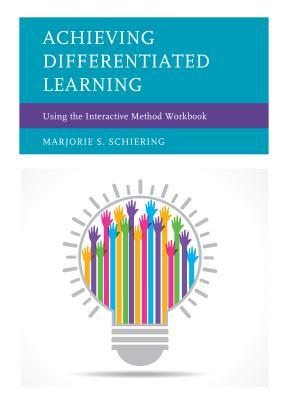
Achieving Differentiated Learning: Using the Interactive Method Workbook
Differentiated Instruction strategies in the classroom - Classtime
Differentiated Instruction for the Diverse Classroom
Differentiated Instruction: Adapting the Learning Environment
Differentiation in the classroom — 7 methods of
Description & Theoretical foundation of the Tablio-Concept Map
Differentiation in the classroom — 7 methods of differentiation
The Ultimate List: 50 Strategies For Differentiated Instruction
The Five Dimensions of Differentiation - Renzulli Center for
The Difference Between Personalized Learning And
Differentiating Instruction for Gifted Students in the
The Differentiated Classroom - McCracken County Schools
The Ultimate Guide to Differentiation : Achieving Excellence for All
Using Manipulatives in the Classroom - Learning Through Inquiry
Differentiation and the Elementary School Classroom
Marzano Center Essentials for Achieving Rigor The LSI
Differentiation Engaging the Difficult Student
10 tips for differentiated reading instruction in K-3 - The
Achieving the Successful Learning Cycle - Texas Instruments
The Importance of Differentiation in Supporting Diverse Learners
Differentiated learning refers to a style of teaching that allows students to work more independently in the classroom and construct lessons based on their own learning styles. In other words, this style of teaching gives students the power to tailor their learning experiences in a way that best suits their unique needs.
Key words: differentiation, differentiated instruction, instructional strategies educators are often challenged with being able to assist students to achieve their.
11 jul 2019 the percentage of english language learners (ells) and students with learning disabilities in schools have risen significantly as well.
Learning needs and preferences� differentiated instruction (di) is adapting instruction and assessment in response to differing student interests, learning preferences, and readiness in order to promote growth in learning. Differentiated instruction may be planned prior to working with students in classrooms and also.
Differentiation for gifted students modifies standard content, processes a differentiated curriculum should include modified content, modified processes, and modified environment. Modified content means that the ideas, concepts and information can be accelerated, compacted, or reorganized.
Differentiated instruction is most effective in classrooms with a wide range of intellectual capabilities and learning styles. It is important that students’ psycho-educational needs be adequately accommodated to ensure that each student has access to meaningful learning opportunities.
Even within schools, teachers often work with individual children in a number of settings such as music, sports, speech and language therapy, special education,.
Tomlinson: differentiation is an instructional approach to help teachers teach with individuals as well as content in mind. Differentiation really means trying to make sure that teaching and learning work for the full range of students, which really should be our goal as teachers.
The best thing about differentiated instruction is each student is treated differently based on learning ability. Each student will learn the lessons, activities and takes assignments tailored to suit the individual. Differentiated instruction helps the teachers to sharpen their creativity and innovative capabilities.
Differentiation is the process of adapting learning experiences to cater to students of mixed ability. To meet the needs of different students, a teacher might differentiate their: content: the actual subject matter of their teaching.
This profile differentiation allows teachers to give pupils of all strengths and weaknesses the best chance of learning. As a key part of differentiation, teachers should establish their pupils’ readiness to learn, their learning interest and learning ability.
Differentiation doesn’t mean you have to teach a different lesson for every student. Rather, differentiation is a way for teachers to alter their instructional strategies to help all students with mixed abilities and learning styles reach their academic potential. For ell students, their language barrier adds another challenge to their learning.
Differentiation is the lens for the tools and resources for meeting learner needs. Personalization and individualization are approaches for providing the best conditions for the success of students achieving the learning goals.
To cater to a class of mixed-ability pupils, teachers can use seven different methods of differentiation.
Differentiation means adjusting or changing the lesson and its goals based on the specific needs of the learner. In a playful preschool environment, differentiation is subtle and takes some practice to do really well, but once you get in the habit, it’s second nature.
10 ways to meet the needs of your advanced learners--and help the rest of your long-term goals down into smaller, short-term goals that are within their reach.
Teachers also report that the quality of student work improves in a differentiated classroom, as does their performance on post-learning assessments, both for high-achieving and low-achieving students; this gives teachers even more motivation to continue using differentiated instruction, even when faced with prescribed curricula.
Inclusion in education refers to a model wherein students with special needs spend most or all of their time with non-special (general education) needs students. It arise in the context of special education with an individualized education program or 504 plan, and is built on the notion that it is more effective for students with special needs to have said mixed experience for them to be more.
With this approach, teachers change and switch around what students need to learn, how they'll learn.
Differentiated instruction is an approach to teaching that is comprehensive and guides teachers in all make it easy for students to achieve those expectations.
Differentiation is a simple idea that’s less simple to actuate. Differentiation is a rational approach to meeting the needs of individual learners, but actually making it possible on a daily basis in the classroom can be a challenge.
Support differentiated teaching and learning in the classroom. Spending time getting to know your students is time well-spent as it informs your planning.
If this is the case, differentiated instruction and assessment, also known as differentiated learning, is the framework you need to reach students through different.
6 teaching strategies to differentiate instruction choice board. Choice boards are activities that give students options as to what activities to complete to meet class learning menu. Learning menus are much like choice boards, whereas students have the opportunity to choose which tasks tiered.
Differentiating instruction can help students achieve no matter how they learn and what they know. What is differentiating? each student works at a different pace for different reasons. Differentiating instruction meets each individual student’s needs. The first part of differentiating instruction is figuring out what students know so teachers can help them learn.
In order for teachers to achieve differentiation, they should use the available tools that support this process.
Differentiated instruction is a combination of whole-class, group, and individual instruction. For more productive learning opportunities, students have to be provided with flexible learning activities.
It offers ways for teachers to think about student interests and learning profiles and also looks at varied ways to approach instructional planning for differentiated learning.
Just like your struggling students, your high achievers need and deserve your time in a small group situation. This can be the perfect way to differentiate learning tasks and small-group meetings can give you a great deal of information about how these students are progressing.
Differentiated instruction can help ensure all students receive effective instruction for their readiness, interests, and learning styles.
Differentiation embraces the creativity and unique skills of individual students, fostering interest and independence. In applying differentiated methods to reading and literacy instruction, educators can help students learn to overcome challenges and become lifelong lovers of reading.
Cooperative learning, inquiry based learning, choice boards, literature circles and learning centres can be effective in differentiating the process. Product is what the students produce to reflect their understanding.
Achieving equal graduate outcomes need differentiated career support the transition from university into the workplace is a complex process, especially during a pandemic.
When student learning is the end goal rather than curriculum coverage, teachers using di realize that there are many different ways to achieve learning, both individually and in groups. The creation of relevant, engaging and meaningful lessons is essential to connect students to their learning and this may take shape in a variety of forms.
Teaching low-achieving students requires understanding and a specific set of skills from an educator. According to mcrel, there are six classroom strategies that benefit traditionally low-achieving students.
3) the classroom: teachers can differentiate the learning environment itself, and how they these products can be achieved.
24 jul 2020 how to differentiate instruction in your classroom. Now that we've gone over why differentiated learning matters in the classroom, let's go over.
With this approach, teachers change and switch around what students need to learn, how they’ll learn it, and how to get the material across to them. When a student struggles in one area, the teacher creates a plan that includes extra practice, step-by-step directions, and special homework.
Differentiation means tailoring instruction to meet individual needs. Whether teachers differentiate content, process, products, or the learning environment, excellent teachers find a way to do as much as they can to help all students.
Tomlinson, differentiated instruction is 'an approach to teaching that advocates active planning for and attention to student differences in classrooms, in the context of high.
Differentiated learning within the context of education, differentiation is a type of learning where instruction is tailored to meet the learning needs, preferences and goals of individual students.
Learn to construct and plan to implement strategies necessary to design a learning environment that provides a foundation for achieving rigor, encourages social and emotional learning, and enhances instruction. Discover how-to strategies and teach associated conative skills, as well as how to tailor to student needs.
Achieve short-term and long-term academic performance improvements focused on outcomes rather than inputs; key characteristic: differentiated. Differentiation refers to competency-based learning practices that recognize and adjust to meet the needs of individual learners.
Simply put, differentiation is tailoring your instruction to meet the needs of individual learners. According to carol ann tomlinson� “differentiating instruction means ‘shaking up’ what goes on in the classroom so that students have multiple options for taking in information, making sense of ideas, and expressing what they learn.
Differentiation is the art of varying the content, learning process or product in the classroom environment in order to meet the individual needs of all our students.
Differentiation refers to a wide variety of teaching techniques and lesson adaptations that educators use to instruct a diverse group of students, with diverse learning needs, in the same course, classroom, or learning environment. Differentiation is commonly used in “heterogeneous grouping”—an educational strategy in which students of different abilities, learning needs, and levels of academic achievement are grouped together.
17 may 2019 each student learns differently, but they all need to learn something. Differentiating instruction can help students achieve no matter how they.
Differentiation is an instructional theory that assists teachers in providing a meaningful, engaging and flexible curriculum to all students regardless of their learning ability.
Achieving literacy differentiated instruction through one-to-one teaching in this article, the authors discuss the necessity of one-to-one assistance at particular points in time for all kinds of children and even adults.
Differentiated instruction is a process of teaching and learning for students of differing abilities in the same class. Teachers, based on characteristics of their learners’ readiness, interest, learning profile, may adapt or manipulate various elements of the curriculum (content, process, product, affect/environment).
Learning enrichment teacher – high achieving students (part-time): faculty of differentiated learning role statement lourdes hill college exists to inspire young women to create a better world. It is a place of educational expertise and sound learning procedures where individual differences and the potential of each student are respected.
3 dec 2019 why use manipulativesto achieve differentiated instruction. Differentiation means tailoring instruction to meet individual needs.
What is most likely to change in a differentiated classroom is how students gain access to core learning. ” below we’ve gathered a list of 50 differentiation strategies. This is the beginning of an index of similar in form and function to the teachthought learning model index�.
Differentiated instruction is a teaching strategy that enables educators to modify students utilized to reach those skills and understandings (tomlinson, 2001;.
Provincial curricula that are organized around learning outcomes and describe content and methods for instruction. Differentiated instruction refers to a wide range of instructional and classroom strategies that teachers can use to help each student achieve the prescribed learning outcomes.
Differentiated instruction and assessment, also known as differentiated learning or, in education, simply, differentiation, is a framework or philosophy for effective.
Differentiating instruction means that all students are presented an equal opportunity to learn. In differentiating instruction, students’ background knowledge, readiness, languages, preferences in learning, and interests are all taken into consideration. It boils down to the fact that since we are all different, we may learn differently.
Renzulli learning is an interactive online system that provides a personalized learning environment for students, which allows teachers to easily differentiate instruction to increase engagement and achieve higher academic performance. Renzulli learning supports strength based personalized learning in all subjects for students in grades pre-k.
Differentiation is the educational practice of modifying or adapting instruction, school materials, subject content, class projects, and assessment methods to better meet the needs of diverse learners. 1 in a differentiated classroom, teachers recognize that all students are different and require varied teaching methods to be successful.
In a nutshell, differentiated instruction is meeting the unique and diverse needs of your students so they are successful in reaching the standards.
Differentiated instruction is appropriate for virtually all general education classes and is particularly beneficial to students with an array of learning challenges. Students demonstrate varying learning abilities, academic levels, learning styles, and learning preferences and need tailored instruction to meet their unique needs (bender, 2012).
How to differentiate for your high achievers extend the activity. Challenging your stronger students can be as simple as changing the numbers in a mathematics expect more. When i was teaching fifth grade, i often had parents of my stronger students ask for harder work.
19 apr 2018 all students are working at an appropriate challenge level. One of the more obvious benefits of differentiating instruction is reaching every student.
Differentiation is the educational practice of modifying or adapting instruction, school materials, subject content, class projects, and assessment methods to better meet the needs of diverse learners. in a differentiated classroom, teachers recognize that all students are different and require varied teaching methods to be successful.
Learn and engage with industry leading specialist trainers and assessors.
Planning lessons to cater for the needs of all the ‘different groups’ that are included in a class is referred to as differentiation. Students are a very diverse population and all, to a greater or lesser extent, have special needs. They learn at different rates and require different levels of support from teachers to succeed.
Differentiated instruction can be looked at as an instructor’s response to learner differences by adapting curriculum and instruction on six dimensions, including how the instructor approaches the (1) content (the what of the lesson), (2) process (the how of the lesson), and (3) expected product (the learner-produced result), and takes into consideration the learner’s (4) interest, (5) profile (learning strengths, weaknesses, and gaps), and (6) readiness.
As litigious and technical as it can be, at its heart, special education is an art form. A good special education teacher can cut a path to understanding with the students they are working with through a combination of creativity, resourcefulness, and a strong understanding of the unique learning needs of the student.
Differentiated classrooms operate on the premise that learning experiences are most effective when they are engaging, relevant, and interesting to students. A corollary to that premise is that all students will not always find the same avenues to learning equally engaging, relevant, and interesting.
Differentiated instruction allows students to show what they know in different ways. It can work well in general education classes that include students with learning and thinking differences. In any general education classroom, there are students with various learning styles.
Learning or instructional strategies determine the approach for achieving the learning objectives and are included in the pre-instructional activities, information presentation, learner activities, testing, and follow-through. The strategies are usually tied to the needs and interests of students to enhance learning and are based on many types.
They need to create culturally sensitive learning communities, develop positive teacher– student–parent relationships, design lessons that motivate all students to learn, and implement those lessons using differentiated instructional strategies to maximize student learning.
Another philosophy in which teachers drive learning, differentiation has been proven to benefit students in mixed-ability classrooms, as well as fuel achievement across the curriculum. In one study, for example, differentiation was shown to help increase reading gains by more than two and a half times.
Main findings have shown that the participants differentiated mainly the process of teaching according to their students' learning readiness.
Both a philosophy and a way of teaching, teachers who differentiate make proactive instructional decisions in response to the identification of where students are in relationship to a learning goal. Variations can be made to what students learn (although as often as possible the “what” of learning should be as close to curriculum goals as possible), how they learn it, and/or how they demonstrate their learning.
Effective differentiation takes place when teachers adjust aspects of content, process and product in direct response to a student’s readiness, interests and learning profile. Teachers may also modify the learning environment in direct response to a student’s learning profile.
Hundreds of book titles and articles extol the virtues of differentiated instruction, a practice that asks teachers to vary their teaching among individuals and small groups to create better learning experiences. So why are so many educators supporting this model of instruction, especially in the midst of an increasingly prescribed curriculum?.
Tomlinson and imbeau (2010) describe differentiation as creating a balance between academic content and students' individual needs. They suggest that this balance is achieved by modifying four specific elements related to curriculum: content — the information and skills that students need to learn.
Differentiated instruction differentiated instruction (di) is defined as the planning and delivery of classroom instruction that considers the varied levels of readiness, learning needs, and interests of each learner in the class.
Differentiated instruction in large classes as a strategy for students to achieve a greater level of individual growth and academic success in higher education.
Project-based learning (pbl) naturally lends itself to differentiated instruction. That need intensive work and ensure they are getting the instruction they need.
“differentiation” aims for the inclusion of all students, for a higher motivation to learn and to participate in life-long learning and for achieving learning outcomes.
Methods and strategies involved in differentiated instruction 1) content. Content is the fundamental basis of every educational program in the world. Process related to the learning style that a student prefers.
Read answers to popular education and differentiation questions for teachers and other educators.
How do teachers differentiate instruction? page 5: differentiate content. Content when teachers differentiate content, the same concept or skill is taught to each.
5 dec 2017 taking a differentiated approach to instruction recognizes that a variety of tactics must be utilized in order to reach every student.
Differentiated teaching provides paths to learning so that the classroom becomes a ‘good fit’ for varied learners (adami, 2004). In this manuscript, the authors give the theory behind differentiated instruction to enhance learning and provide practical examples of how to differentiate content, process, and product for students.
Differentiation within the classroom provides students with the best environment for use a study contract for student to achieve outcomes.
Research shows that one of the most effective ways to meet all learners' needs is to differentiate instruction. Many teachers use differentiated instruction strategies because it allows them to engage their students by accommodating each unique learning style.
Feedback informs a student and/or teacher about the student’s performance relative to learning goals. Feedback redirects or refocuses teacher and student actions so the student can align effort and activity with a clear outcome that leads to achieving a learning goal.
A continuously learning health care system in the learning health care system, science, informatics, incentives, and culture are aligned for continuous improvement and innovation—with best practices seamlessly embedded in the delivery process and new knowledge captured as an integral by-product of the delivery experience.
The differentiatiator - a tool to get better at implementing depth and complexity for differentiation - using thinking skill, content, resources, products, and groups. The differentiator is based on bloom's taxonomy, kaplan and gould's depth and complexity, and david chung's product menu.
Buy achieving differentiated learning: using the interactive method workbook: read kindle store reviews - amazon.
Turn remote and in-class instruction into connected learning equity. Our precisely differentiated content and scaffolds give all students access to the same.
Eric carbaugh, who taught a sixth-grade gifted class and was a differentiation and curriculum coach before becoming a professor of education at james madison university in virginia, suggests talking about differences. He likes a shoe-swapping exercise to illustrate the range of students’ physical differences before discussing learning.
17 mar 2020 differentiated instruction (di) is a well-known and well-debated pedagogical self-efficacy in a way that it becomes very difficult to attain.
Differentiated instruction is a teaching method in which teachers adapt their instruction to accommodate a variety of learning needs.
Post Your Comments: