Read online Biology of Seizure Susceptibility in Developing Brain (English and French Edition) - Takao Takahashi | PDF
Related searches:
Seizures: Types, Causes, and Symptoms
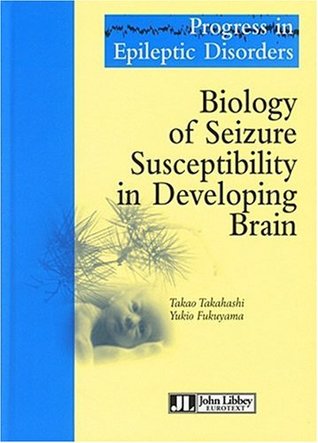
Biology of Seizure Susceptibility in Developing Brain (English and French Edition)
Causes and Types of Seizures - Facty Health
The Genetics and Molecular Biology of Seizure Susceptibility
Genetic and environmental interactions determine seizure
Investigating cortical oscillations, coherence and seizure
Modeling glial contributions to seizures and epileptogenesis
Epilepsy and Genes Epilepsy Foundation
Seizures and Epilepsy: An Overview for Neuroscientists
Common Epilepsy Causes and Seizure Triggers - WebMD
Post-Traumatic Epilepsy and Seizure Susceptibility in Rat Models of
Robert Sapolsky Explains the Biological Basis of Religiosity, and
Effects of protein synthesis inhibitors on sleep and seizure
Enhanced susceptibility to stress and seizures in GAD65
PKA-RIIβ autophosphorylation modulates PKA activity and
Mitochondrial oxidative stress and increased seizure
Genetic and phenotypic analysis of seizure susceptibility in
Synaptic Zn2+ and febrile seizure susceptibility - Reid
The genetics and molecular biology of fever-associated
Eclampsia, defined as unexplained seizure in a woman with preeclampsia, is a life-threatening complication of pregnancy with unclear etiology. Magnesium sulfate (mgso4) is the leading eclamptic seizure prophylactic, yet its mechanism of action remains unclear. Here, we hypothesized severe preeclampsia is a state of increased seizure susceptibility due to blood-brain barrier (bbb) disruption.
Gene identification has progressed rapidly for monogenic epilepsies, but complex gene–environmental interactions have hindered progress in gene identification for multifactorial epilepsies.
Several seizure susceptibility qtls mapped in the b6 and d2 model have been confirmed by creating and studying strains of mice that are congenic between b6 and d2, that is, strains in which a defined segment of the genome (representing the qtl interval) is transferred from one strain to the other via standard backcrossing and dna marker-based selection of progeny. Qtls are confirmed when transfer of the genomic segment produces a predictable alteration in the phenotype of the congenic strain.
Seizure susceptibility is greatly influenced by genetic factors. At present, more than a dozen genes have been linked to various epilepsy syndromes in humans, while in mice more than 25 genetically mutated strains have epileptic phenotypes (mcnamara 1999; puranam and mcnamara 1999). Genetic factors can also suppress seizures and epileptogenesis.
Aug 25, 2020 there is a clear cause for epilepsy in only a minority of the cases. Typically, the known causes of seizure involve some injury to the brain.
The seizure phenotype of swxl-4 can be explained and replicated fully by the inheritance of susceptibility alleles from its progenitor strains, swr/j and c57l/j.
The mission of the epilepsy foundation is to lead the fight to overcome the challenges of living with epilepsy and to accelerate therapies to stop seizures, find cures, and save lives.
We showed that an abnormality in glua1 palmitoylation led to hyperexcitability, resulting in epileptic seizure. This is the first identification of a specific palmitoylated protein critical for the seizure-suppressing process.
In addition to the genetic and molecular advantages of using drosophila,ithas been found that seizures in drosophila share much in common with seizures seen in humans. However, the most powerful aspect of this model lies in the ability to accurately measure seizure susceptibility.
Pdf in a given population, certain individuals are much more likely to have seizures than others. This increase in seizure susceptibility can lead to find, read and cite all the research.
Mar 29, 2018 to assess whether seizure susceptibility is enhanced by removal of kir4. 1 data collected from each optic nerve was considered a biological.
Although many genetic defects that cause seizure susceptibility have been identified, the defects involve disparate biological processes, many of which are not neural specific. The large number and heterogeneous nature of the genes involved makes it difficult to understand the complex factors underlying the etiology of seizure disorders.
In the current study seizure susceptibility was quantified in a variety of mutant and wild-type strains, and it was found that genetic mutations can modulate susceptibility over an extremely wide range. This genetic modulation of seizure susceptibility apparently occurs without affecting the threshold of individual neurons.
(d) circadian increases in seizure susceptibility are correlated with circadian decreases in the level of serotonin (schreiber and schlesinger, 1971). (e) light-cycle manipulations which result in increased seizure susceptibility are accompanied by decreases in ne in brain (schreiber and schlesinger, 1972).
Because seizures may happen at any time, it helps to be prepared. This is true even if medicine usually keeps your seizures under control. Start by telling those you live and work with about your health condition.
From daily practice, clinicians are well aware about a close correlation between the degree of seizure susceptibility and age of the individual. Pathophysiological mechanisms involved are multiplex, including race/gender nutrition, receptors/ion channels, dysgenesis, pharmacokinetics of aeds, acute illnesses/inflammation and many others.
Underling biology that governs the age-dependent seizure susceptibility is a new, exciting research field for every pediatric epileptologists and developmental nouroscientists. From daily practice, clinicians are well aware about a close correlation between the degree of seizure susceptibility and age of the individual.
Jun 24, 2015 neuroinflammation with activation of microglia and production of proinflammatory cytokines in the brain plays an active role in epileptic.
This change can cause dramatic, noticeable symptoms or even no symptoms.
Epilepsy is one of the most common and intractable brain disorders. Mutations in the human gene lgi1, encoding a neuronal secreted protein, cause autosomal dominant lateral temporal lobe epilepsy (adlte). However, the pathogenic mechanisms of lgi1 mutations remain unclear.
Replenishing cxcr4 expression alone in ns/pcs was sufficient to overcome the aberrant migration of newborn neurons and increased seizure susceptibility in vpa-exposed mice. Thus, prenatal exposure to an aed, vpa, has a long-term effect on the behavior of ns/pcs in offspring, but this effect can be counteracted by a simple physical activity.
The pathophysiology of epilepsy and seizures is diverse, accounting for the many different types of seizure disorders. However, one commonality across epilepsies is a disrupted balance between excitatory (via glutamatergic signaling) and inhibitory (via gabaergic signaling) drive at the synaptic level that can result in seizure activity.
Key words: development—seizures—status epilepticus—kainate—injury—.
Driving and transportation independent living legal help ef my seizure the laboratory uses a variety of techniques on biological samples to assess.
A new study unravels a link between a protein that can modify cellular metabolism in the brain and seizure susceptibility. The research, published by cell press in the may 24 issue of the journal.
Oct 23, 2019 automated methods in seizure detection: our research and beyond general recurrence risk (at least 60%) after two unprovoked seizures,.
Abstract fever-associated seizures or epilepsy (fase) is primarily characterised by the occurrence of a seizure or epilepsy usually accompanied by a fever. It is common in infants and children, and generally includes febrile seizures (fs), febrile seizures plus (fs+), dravet syndrome (ds) and genetic epilepsy with febrile seizures plus (gefsp).
Seizures can cause changes in behavior, uncontrollable movement, and loss of consciousness. There are many types of seizures and unique causes behind each.
Jun 23, 2020 we present basic information on circadian biology, but focus on relationships between bmal1, seizure susceptibility and regulation of cell.
To seizure susceptibility (szs) provides information both on the biology of seizures and on the pathogenesis of epilepsy. Accordingly, several different lines of research have provided.
The study, published today in the journal cell, is the first to establish a causal link between seizure susceptibility and the gut microbiota—the 100 trillion or so bacteria and other microbes.
She studied the neurobiological underpinning of seizure susceptibility in mice and published a first author paper in epilepsy and behavior.
Diets deficient in amino acids -- chemicals that make up proteins -- can significantly increase susceptibility to epileptic seizures in rats, according to a study by researchers at the university of california, davis. The findings may lead to a better understanding of some of the mechanisms involved with epilepsy in humans.
Seizures can happen for a variety of reasons, and they also range in severity. Although a common medical occurrence, sometimes it's possible to determine why seizures happen and, other times, doctors don't know the cause.
Live a healthy lifestyle! subscribe to our free newsletters to receive latest health news and alerts to your email inbox.
May 21, 2013 walter and eliza hall institute postgraduate lecture: 13 may 2013 professor sam berkovic epilepsy research centre melbourne brain centre.
These data suggest that chronic mitochondrial oxidative stress initiated by superoxide (o 2 −) radicals is sufficient to increase seizure susceptibility due to aging, environmental stimulation, or excitotoxin administration.
Dec 20, 2019 traumatic brain injury (tbi) carries a risk of developing post-traumatic epilepsy ( pte).
A chemical corrector, 4-phenylbutyrate (4pba), restored lgi1e383a folding and binding to adam22 and ameliorated the increased seizure susceptibility of the lgi1e383a model mice.
View student reviews, rankings, reputation for the online as in biology from barton county community college the online as in biology degree program from barton county community college is designed to provide the first two years of instruct.
Seizure susceptibility in the naked mole-rat highlights d eusocial african naked mole-rats raise colony-nest co 2 to anticonvulsant levels d naked mole-rats harbor an epilepsy-related variant in neuronal cl– extruder kcc2 d gaba-acting antiseizure drug diazepam triggers seizures in naked mole-rats d diazepam is rendered seizure-suppressing in nest-like levels.
Seizures can result from a variety of brain insults in- genetics, behavior, and electrophysiology and is amenable cluding head trauma, fever, illness, and electroconvul- to high-throughput mutagenesis screens. In addition, a sive shock, but a main source of seizure susceptibility ap- drosophilamodelofepilepsy existsinthebang-sensitive.
Diets deficient in amino acids -- chemicals that make up proteins -- can significantly increase susceptibility to epileptic seizures in rats, according to a study by researchers at the university.
Seizure behaviors and electroencephalographic (eeg) monitoring. Changes in seizure susceptibility) related to structural abnormalities and/or gene loss, animals are tested for seizure threshold using the volatile convulsant flurothyl to provoke seizure activity.
We have turned to drosophila as a model to address these problems and have identified genetic mutants that are more sensitive to seizures, bang-sensitive (bs) mutants, such as slamdance (sda), bangsenseless (bss) and easily shocked (eas), as well as mutants that are resistant to seizures, such as paralytic, maleless(napts), shaking-b(2) and shaker.
Photostimulation of the seizure-sensitive mutant parabss1 causes behavioral paralysis that resembles paralysis caused by mechanical stimulation, in many aspects. Electrophysiology shows that photostimulation evokes abnormal seizure-like neuronal firing in parabss1 followed by a quiescent period resembling synaptic failure and apparently responsible for paralysis.
Examine how dysfunctional pka signaling impacts neuronal activity and seizure susceptibility in a mouse model of temporal lobe epilepsy.
Overall, febrile seizures occur in 2%–5% of children in the susceptible age range. Additional perspectives on epilepsy: the biology of a spectrum disorder.
In the current study seizure susceptibility was quantified in a variety of mutant and wild-type strains, and it was found that genetic mutations can modulate susceptibility over an extremely wide.
Gsh/gssg is a commonly used biomarker of oxidative stress in biological systems.
These mutations revert epilepsy phenotypes back to the wild-type range of seizure susceptibility. The genes responsible for seizure suppression are cloned with the goal of identifying targets for lead compounds that may be developed into new anti-epileptic drugs (aeds).
A new study unravels a link between a protein that can modify cellular metabolism in the brain and seizure susceptibility. The research, published by cell press in the may 24th issue of the journal.
Author summary many patients with neurological disorders suffer from an imbalance in neuronal and circuit excitability and present with seizure or epilepsy as the common comorbidity. Human genetic studies have identified many epilepsy-associated genes, but the pathways by which those genes are connected to brain circuit excitability are largely unknown.
Epilepsy means “seizure disorder”, so people with epilepsy have recurring and unpredictable seizures. A seizure is a period where cells in the brain, or neurons,.
Various drosophila models of human disease have recently received increased interest. The main goal is to uncover the fundamental biological basis for human pathology taking advantage of the power of drosophila genetics. This review examines a set of drosophila seizure-sensitive mutations that model human seizure disorders, especially epilepsy.
Here, we hypothesized severe preeclampsia is a state of increased seizure susceptibility due to blood-brain barrier (bbb) disruption and neuroinflammation that lowers seizure threshold. Further, mgso 4 decreases seizure susceptibility by protecting the bbb and preventing neuroinflammation. To model severe preeclampsia, placental ischemia (reduced uteroplacental perfusion pressure; rupp) was combined with a high cholesterol diet (hc) to cause maternal endothelial dysfunction.
Here, we examined the spatial and temporal requirements for kcc loss-of-function to modify seizure-susceptibility in flies. Targeted rna interference (rnai) of kcc in various sets of neurons was sufficient to induce severe seizure-sensitivity. Interestingly, kcc rnai in glia was particularly effective in causing seizure-sensitivity.
Post Your Comments: